Showing posts with label Environmental Issues. Show all posts

Orcas Trapped in Ice

Here's some amazing footage of the dozen killer whales trapped in the ice about 30 kilometres off the coast of Inukjuak, Quebec.


If the reports are true, then there is a happy ending to this story.
The killer whales reportedly reached more open waters in Hudson Bay thanks to overnight winds that shifted the ice.

The Future of Polar Bear Tours?

Is The Polar Bear Family & Me shedding light on the future of polar bear tours in the Arctic?


Good bye group buses, hello individual perspex cages!

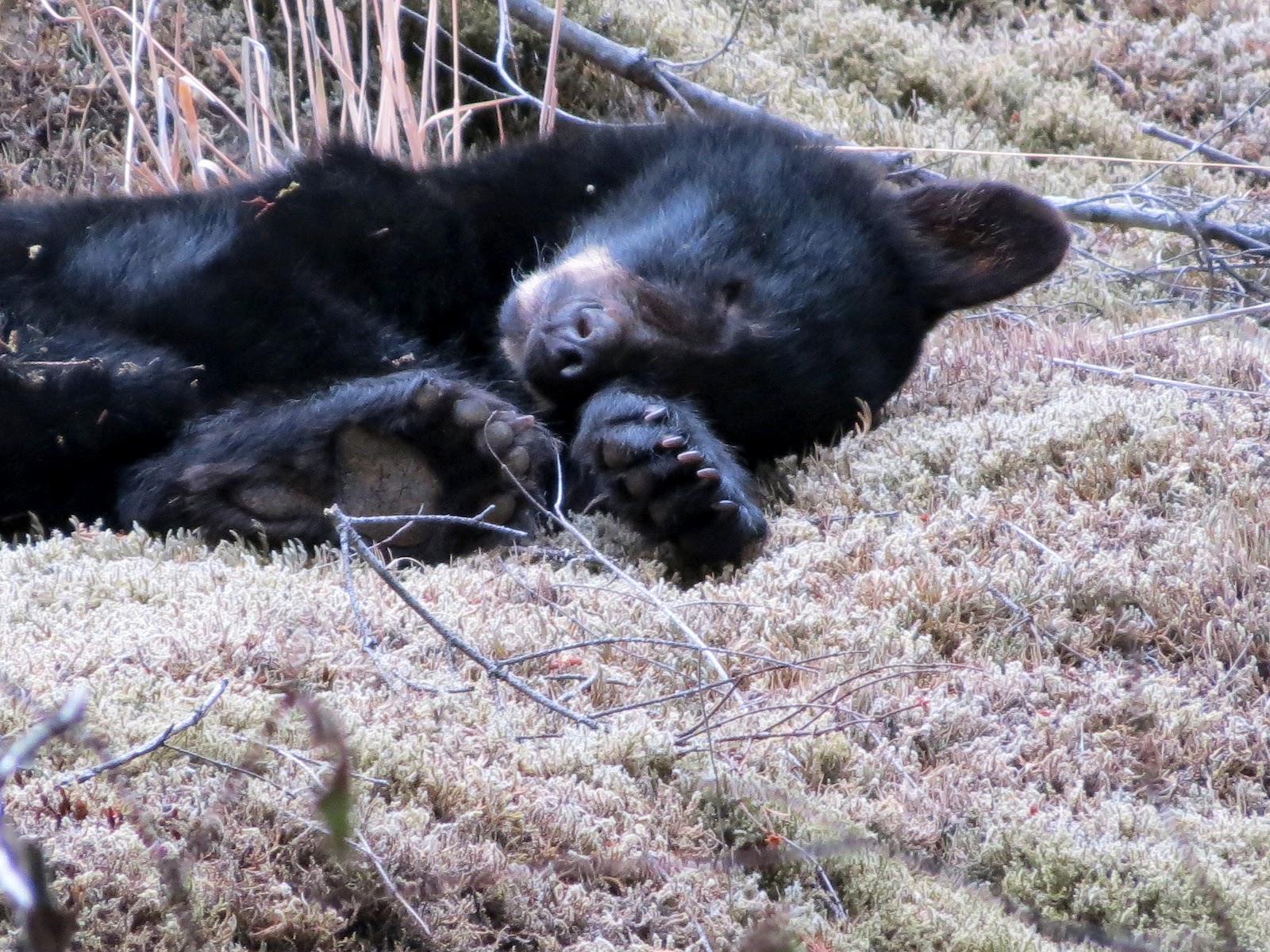
Sleepy Bear

Logging is one of those gut-wrenchingly complicated issues for me. On one hand, seeing vast swaths of land gutted of its natural beauty makes me sick but on the other hand, logging is still a necessary evil as we still depend on lumber for so many things in our daily lives. There's a large portion of the BC population that also relies on the forestry industry for jobs so livelihoods are at stake, even as industry increasingly exports Canada's raw logs overseas. With such reliance on logging, there's no attempt to hide it on Vancouver Island, which makes it easier for curious members of the public to view the effects logging has on the forest ecosystem. I chose to take a bit of a closer look yesterday. I did not like it one bit. Although seedlings grow where massive trees once stood, the ecosystem will not return to its former glory for a very, very long time. These lands have been basically transformed from wild forests to cropland.

This is not the positive outlook you've come to expect on this blog so to help brighten things up a bit, here are a few photos of a little black bear, I came across, taking a nap on a mossy hill that likely took hundreds of years to develop into a cozy mattress.


I'll just add that this black bear was enjoying an early afternoon siesta in a small forested area right next to this...


No soft blankets of moss here.

Avatar Grove - Home of Canada's Gnarliest Tree

After a two-year campaign spearheaded by the Ancient Forest Alliance and backed by thousands of petitioners, a small patch of forest affectionately referred to as "Avatar Grove" near Port Renfrew, British Columbia, was declared off-limits to logging through a new Old-Growth Management Area.  After hearing and reading much about this forest and its star attraction, Canada's Gnarliest Tree, it was time to check it out.

By following the directions to Avatar Grove, you head towards Port Renfrew and beyond, where you can see evidence of clear-cutting from the road.  It's very sad to see mass swaths of forest habitat devastated by mankind, and as you walk through protected areas like Avatar Grove, your appreciation for nature and its power to renew itself provides a small sense of optimism that those destroyed areas will once again rise to a great mass of biodiversity over the next few centuries.

Nevertheless, on to cherish a small victory against the all-mighty forestry industry.

Avatar Grove is split into an upper and lower grove by a logging road. While some may rush on over to the Upper Grove to see Canada's Gnarliest Tree, a walk through the Lower Grove can be just, if not, more rewarding, as giant Douglas Firs and Red Cedars tower over you as you make you make your way to a babbling steam and waterfall.


This isn't a nice afternoon walk with grandma as some may say!  Unless it's one of my grandma's you're talking about! Between the relative steep slope near the start of both hiking paths to the muddy and slippery sections, caution should be taken on the makeshift trails and proper footwear is highly recommended. If you're on the adventurous side, don't make the same mistake I made in wearing a decent pair of jeans either!  But enough about that.  This forest is remarkable!


There are plenty of examples of lush old-growth rainforest here, including many very interesting red cedars with plenty of twists and contorted burls.  Pay close attention to the lush vegetation of the understorey, and how trees are growing on top of other trees. Very cool stuff if you ask me.


While there is no formal path in Avatar Grove, a path has slowly worn its way along the forest floor. This can be a good thing for humans but a potentially bad omen for these beloved trees. Sure, they may have been saved from the chainsaws of the logging industry but now they may face a slow and arduous death, in the face of erosion caused by the eager visitors to get a very close look of these magnificent trees.  Hikers trampling near the base of trees for a great photo op have revealed roots that were once underground. While a couple of footsteps may not seem like much, multiple those intrusions by the hundreds over just a couple of years in the wet conditions of the rainforest, and significant amounts of soil around some of these trees slowly stray further away from their original location.  I'm usually not a fan of boardwalks in areas of ecological importance as I have seen them ruin the ambiance and turned them into tourist traps but while I walked through Avatar Grove, it became readily apparent that the status quo can not continue over the long run, especially as word of Avatar Grove's beauty becomes known to the mainstream public.

Is it worth potentially endangering the longevity of these few jewels to raise awareness of old-growth rainforests and hopefully, protection of other old-growth areas from logging? Perhaps the greater good trumps but maybe we should try to make Avatar Grove an example of a sustainable paradise where hikers and nature can co-exist with as little damage as possible to the trees and ecosystem this initiative has helped protect. Please keep this in mind when visiting the Grove as I too had great ideas as to the types of photographs I thought I'd take of myself with the trees but looking at the current state of the base of many of these trees, I chose not to take part as many have apparently done so in the past. Hopefully, you will try to thread carefully as well.

It should come as little surprise that the threat of erosion might be greatest near Canada's Gnarliest Tree in the Upper Grove.  In addition to all the foot traffic, natural erosion appears to occurring nearby as well.

It just happened that upon logging into my computer back home that evening, I received an e-mail from the Ancient Forest Alliance with news of their latest initiative of raising funds to build an official boardwalk and trail to protect the Avatar’s Grove ecological integrity and visitor safety.  Looks like great minds think alike! Hopefully, the boardwalk plans are fairly basic so this incredible setting isn't ruined by heavy-duty boardwalks found in other rainforests along the coast.

Anyways, you probably arrived here to see photos of Canada's Gnarliest Tree so here it is ...


Many photos online show the tree from a front angle, either straight on or a bit from the side (like above) so here are a few from the back side, just in case you were curious...


Somewhat surprisingly, the tree has been hollowed out over time on its back side...


Once again, my photographs fail to capture the beauty and splendour of this special place.  It truly is a remarkable forest and definitely worth preserving. I will certainly be coming back to Avatar Grove and the surrounding area to explore it in even greater detail.

--- August 2012 Update ---

A couple of videos from my recent visit to Avatar Grove:


Apologies about the dark videos. It seems as though the conversion to YouTube's video format darkened the video big time. You'll just have to visit Avatar Grove yourself!

How to Rescue a Beached Dolphin

Weird... just the other day, I was thinking about what I'd do if I came across a beached whale while walking along a deserted beach.

Well, it just happens that about 30 dolphins beached themselves at Arraial do Cabo (Brazil) and were saved by beachgoers during the morning of March 5, 2012.

The whole event was captured on video.


Now that's how to save a pod of beached dolphins.

Gratíssimo to those who got wet and helped in the rescue!

TEDx and the Power of Sharing Ideas

If you share a passion for ideas or are simply looking for inspiration, you have to attend a TEDx event like I did last weekend.

What is TEDx?

In the spirit of Ideas Worth Spreading, TED has created a program called TEDx, a program of local, self-organized events that brings people together to share a TED-like experience.

So who's TED?

TED isn't a person. TED is a nonprofit devoted to Ideas Worth Spreading. It started out as a conference bringing together people from three worlds: Technology, Entertainment, Design. Since then its scope has become ever broader. Along with two annual conferences -- the TED Conference in Long Beach and Palm Springs each spring, and the TEDGlobal conference in Edinburgh UK each summer -- TED includes the award-winning TEDTalks video site, the Open Translation Project and TED Conversations, the inspiring TED Fellows and TEDx programs, and the annual TED Prize.

Still confused?

Perhaps, watching a TED Talk video will flesh it all out...


still not convinced?


When you attend a TED event, not only do you get to listen to incredible ideas and inspirational stories but you also have the opportunity to discuss your own with like minded individuals.

The fact that TEDxVictoria was sold out and included so many youth, gives me faith that our future is in good hands.

TED is a great start at inspiring the masses and starting the conversation but how do we turn those ideas and inspirations into reality?

This is where I hope the Hub comes into the picture.

The Hub identifies itself as a social enterprise with the ambition to inspire and support imaginative and enterprising initiatives for a better world. The Hub is a global community of people from every profession, background and culture working at 'new frontiers' to tackle the world's most pressing social, cultural and environmental challenges. It believes that there is no absence of good ideas in the world.  Couldn't agree more!

The Hub believes the problem is a crisis of access, scale, resources and impact. So it felt vital to create places around the world for accessing space, resources, connections, knowledge, experience and investment. The Hub has been working across five continents to create places for people who change things. This is the ambition. The Hub set out to create places that borrow from the best of a member's club, an innovation agency, a serviced office and a think-tank to create a very different kind of innovation environment. Places with all the tools and trimmings needed to grow and develop new ventures. Places to access experience, knowledge, finance and markets. And above all, places for experience and encounter, full of diverse people doing amazing things. These places are called Hubs, and Hub Ottawa is set to open very soon.

Hopefully word gets out on initiatives like TED and Hubs, and we turn more great ideas and thoughts into reality.

Salmon Run

One of the many perks to living in Victoria is being able to witness a very interesting natural phenomenon as salmon return to Goldstream Provincial Park, only 16km away from the provincial capital. After the fuel spill earlier in the year, there was uncertainty if the salmon would return but luckily some did.


It seems as though I was a bit late in witnessing the salmon run in all its exciting glory this year but it was still very interesting to watch nature - perseverance, sex, and death - in its rawest form just a few feet away.


Borrowing the words of one of the Park's interpretative signs:


From October to December, Goldstream Provincial Park is host to one of nature's most fascinating spectacles. It begins when three species of Pacific salmon, compelled by an irresistible urge to forsake the rich feeding grounds of the Pacific coast, return to this stream to spawn a new generation.


Upon reaching the spawning grounds, male chum develop large hooked jaws with dog-like teeth, and purplish bars along their sides. Females develop a dark stripe. The female selects a patch of gravel and is joined by males who fight continuously to be near her. Males moves back and forth, occasionally quivering over her back.


The female digs a redd (a series of nests) in the gravel by turning on her side and thrashing her tail along the stream bottom, causing rocks to be lifted and carried downstream by the current. Testing the depth with her anal fin, she continues to dig until the nest has reach the right depth - as deep as half a metre.


The female releases about 400 eggs into the nest to be fertilized simultaneously by milt from the male. Time is critical because once the eggs swell and harden, they can no longer be fertilized. The female then moves upstream to dig a new nest. This excavation covers the deposited eggs just downstream. The process continues until about 3,000 eggs have been laid.


Males may leave the redd site to look for another egg-bearing female but the female remains to prevent others from claiming the territory and digging up her eggs. Weakened and battered, both males and females are dead within 10 days of entering the stream. 


A new generation of salmon now lies under the gravel, awaiting its own battle for survival.

Before You Swim with Dolphins

As a little boy I had a real fascination with nature and always dreamed of swimming with dolphins so it was no surprise that I was really excited to visit Marineland in Niagara Falls as a young teenager. If you don't know, Marineland is an amusement park featuring performances by a number of different marine animals such as dolphins, walruses, sea lions, and at the time, killer whales. 

But even back then, I knew something wasn't right. Relative to their size, the pools these animals lived and performed in were disrespectfully small. The facilities were more like prison cells for the mammals, and despite their happy demeanor, the animals were obviously stressed, especially the orcas, with their fins heeled over to one side.

Flash forward an embarrassing number of years and the documentary, The Cove, comes out and reveals how our insatiable appetite for all things dolphin is actually fed. The Cove brings to light how these majestic, intelligent creatures are herded and captured for export to marine parks and swim-with-the-dolphin exploits around the world. And if that isn't enough to make you mad and sad at the same time, hidden cameras and microphones reveal what happens to the dolphins and porpoises not selected.


The Cove is a must-see documentary, especially if you plan on visiting a marine park, swimming with the dolphins, or trying dolphin meat while on vacation, and even if you're not, it's definitely worth acting upon.


“A dolphin's smile 
is nature's 
greatest deception.
It creates the illusion 

they're always happy.”
- Richard O'Barry

Her name was Lola...

June 3, 2010 (Day 16)

We left Puno at about 7am aboard a tourist bus towards Copacabana, Bolivia.

So it was no surprise that Copacabana was the official song of the day.  If only we could have remembered all the words.... lol

About half-way through our 3-hour journey, the bus stopped at a currency exchange counter that probably provides a commission to the bus operator but it surprisingly provided a fairly reasonable exchange, which was confirmed by a fellow Canadian checking out the latest rates on his phone.

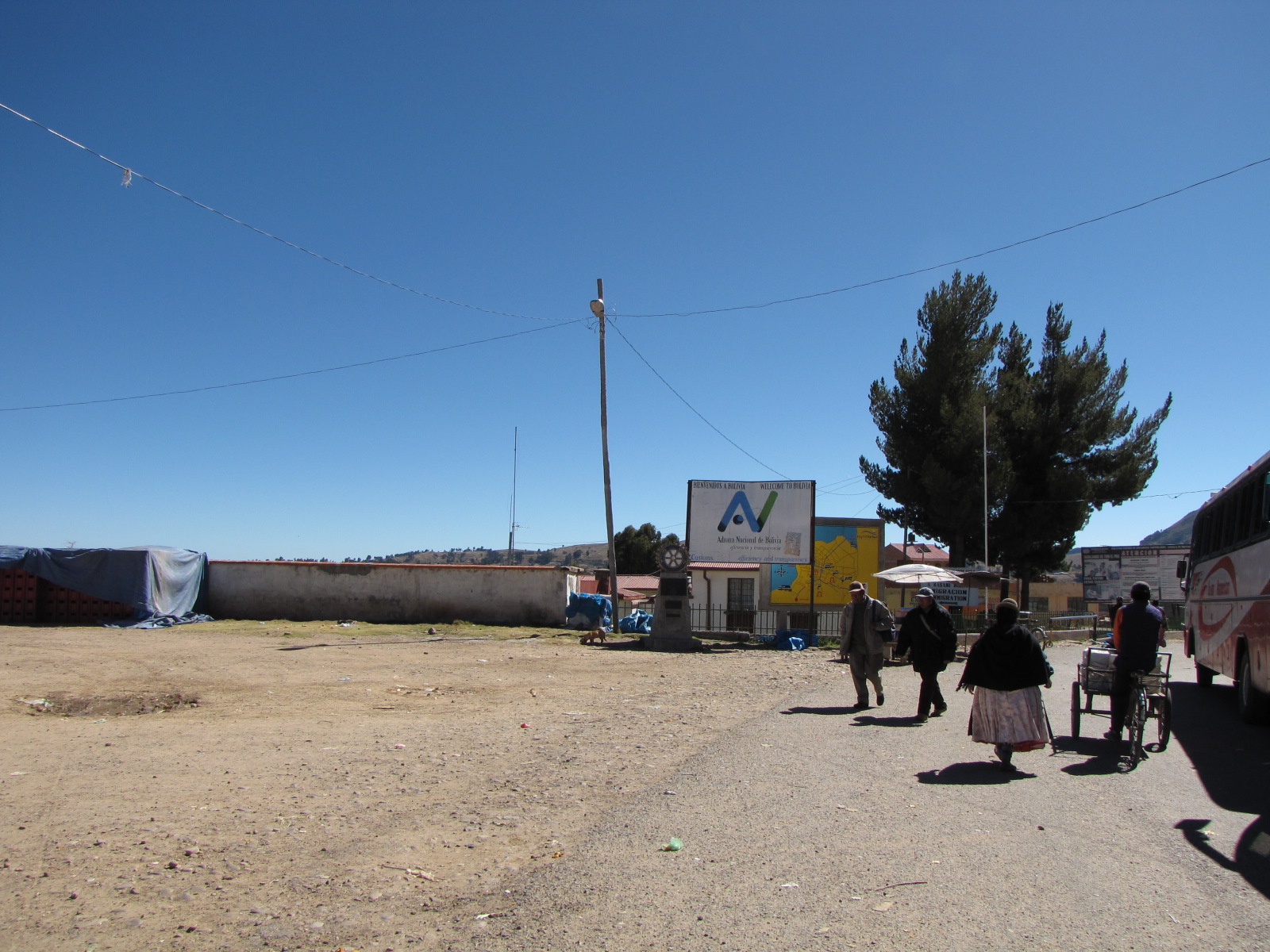
After exchanging our U.S. Dollars for Bolivianos, we boarded the bus and headed to the Peru-Bolivian border.  Along the way, we were provided with forms to fill out, along with the helpful instructions of "Just check the 'No' boxes" ;-)  At last, we reached the border, where we got off the bus and headed over to a little office where we handed over our Peruvian immigration papers and Canadian passports for scrutiny and our exit stamps. 


We then proceeded to walk up the road


and walk across the border into Bolivia, where we stepped into another small office to present our Bolivian paperwork and passports for verification and stamping.


Everything went smoothly and since some of you were curious, no bribes were required.  We boarded our bus and were once again on our way to Copacabana.  Interestingly enough, there is a 1-Boliviano tax upon entry to city limits of Copacabana.  Yes, one Boliviano (or about 15 cents Canadian)!  And yes, they do collect it.  A man boarded the bus, and collected it from each and everyone of us.  He then proceeded to walk back down the aisle to give us a receipt!  Not really worth the time and effort in my books, but then again, I guess every penny counts in Bolivia.

Yes, we're in Copacabana, baby!

The noon sun is shining.

There's not a cloud in the sky.

Lake Titicaca and the beach await us!


The bus dropped us off in front of their office near the city's main plaza and we made our way uphill to our hostel, where we quickly found ourselves in our summer clothes, and skipped on our way back down the hill to the beach, while humming away our favorite song of the day. Though when we hit the beach, we were thoroughly disappointed.  The view of the beach from our hostel was very deceiving.  The beach, if you can call it that, consisted mostly of rocks, grass, broken glass, and those extremely tacky swan paddle boats.  No sandy beaches here, and the water along the shoreline didn't look or smell too inviting either.  It's quite unfortunate really, considering the beautiful setting we were in but that quite frankly appears to be the case all over Bolivia, where people don't seem to particularly care about the upkeep of the environment despite the economic benefits it could provide because Copacabana could very easily become a major destination resort town if the waterfront was cleaned up.


After inspecting the shoreline and hoping for better sands further away from the town, we determined that it was a fruitless exercise, and proceeded to head back and have lunch at one of the beach-side restaurants.  Another disappointment.  They first got two of our three orders completely wrong, and then the food was fair, at best.  Copacabana was not creating a great lasting impression....

After walking around town, we headed back to Hostal La Cúpula to relax in the hammocks overlooking the bay.  The view was spectacular with the sun basking the hills, and it was nice to just lie back and relax.


It quickly became cooler as the sun set, so we grabbed our warmer gear and headed back into town where we observed a beautiful sunset from the main street before settling on a Mexican food restaurant.  One step inside Nimbo Cafe Restaurant and we knew we hit the jackpot!

It was the creepiest yet also most hilarious restaurant I've ever come across.  Words can't describe its interior.  The owner must have been on a certain somethin' something when decorating the place or just plain old creative in a very unique and obscure way... alpaca rugs on the seats, fake vines with some blinking Christmas lights hanging from the ceiling, a miniature dwarf collection, mystic creatures everywhere, and who can possibly forget the wall painting of the girl with the unicorn horn, lol.

At first, we were the only ones there, but as the evening progressed, more people showed up and their reactions were priceless... from scared to confused to just being curious, everyone's reaction was pretty much the same as they made their way to the back of the restaurant in search of the elusive waiter.  It was nice to just relax, enjoy each other's company over a candlelight dinner and some very lively Coronas while playing cards in this hilariously creepy place.

"Perfection is achieved, 
not when there is nothing more to add, 
but when there is nothing left 
to take away."
- Antoine de Saint-Exupery

The Danube at Budapest


From what I could gather, Budapest's major attractions are primarily located on the shores of the Danube River and from a distance, the Danube definitely adds to the city's popular appeal
but upon closer inspection, one quickly discovers that the Danube might not be the cleaniest of rivers...
That being said, these waters have already travelled quite a bit through Europe so this wasn't a major surprise. But what grabbed my attention, was the stench that whiffed through the air at certain points along and above the river, particularly near the spot shown in the photos below.  
Now, I'm hoping that is a small natural tributary but it looked and smelled more like raw sewage.  Aghhh, the smell was horrendous!  Luckily, I had very little to eat that day because I was very close to throwing up on several occasions.  Nevertheless, it seems to be a popular fishing spot!
I don't know how they do it nor can I believe that the nearby river cruise ships (and their guests) tolerate such odours.

Since this is a blog after all, I'll just step onto my tiny soapbox and say that I was deeply disappointed in the state of the Danube River and its apparent disregard by its stakeholders, especially consider the great economic benefits the river provides  Although easier said than done, considerable efforts should be made to clean up the river, its shoreline, and watershed as this gem of a river deserves better.

Popular Posts

Gadgets By Spice Up Your Blog