Showing posts with label Cusco. Show all posts

All Aboard to Aguas Calientes

May 30 (Day 12)


The day begins with an early taxi ride to the train station.  There were some concerns earlier in the week when we came across another train station in Cusco named the Machu Picchu station but we were informed that station was closed so we had faith in the instructions on the PeruRail web site, and headed to the Ollantaytambo station.


We arrived at the station at the recommended time but this was not warranted.  That being said, we boarded our little bus much earlier than the posted departure time and as soon as the bus filled up, we were on our way to Ollantaytambo.  Now you might be wondering why we got on a bus at the train station, or if you are a little more familiar with Peru, why weren't we taking the train? Well, the answer is simple.  After the floods and subsequent landslides in early 2010, portions of the railway to Aguas Calientes (now known as Machu Picchu Village) were completely damaged so PeruRail offered a bus+train option to get its passengers from Cusco to Aguas Calientes until the railway was completely repaired (which is supposedly now the case).  


After we climbed the mountainside to get out of Cusco, we encountered incredible farming landscapes, exciting winding roads (on which drivers insisted on passing the bus on blinding curves instead of the straightaways), and head-to-head showdowns between buses on the narrow village streets.  After about two and a half hours, we arrived at the temporary station at Ollantaytambo, where we waited until boarding time for the train alongside the Urubamba River.


On their website, PeruRail made a big deal about the luggage restrictions but we did not see anyone get pulled aside and harassed about an oversized backpack.  That being said, we did wonder how it worked for people returning to Cusco after hiking the Inca Trail.  Surely, some special considerations are in place for those people as a small daypack would not suffice for a four-day trek.  


Since you're probably curious about the interior of the PeruRail "New Backpacker" class train to and from Machu Picchu, here's a photo to satisfy your curiosity:


And since a nearby couple were fancied by the wagon's washroom and deemed it better than any washroom they saw in any European train, here are a couple of photos for your viewing pleasure:


The wagon's skylights were great for appreciating the mountainous surroundings and seeing some ruins along the way, but they also let the warm sunshine in, so our wagon soon felt like a greenhouse but I'm not complaining.  The train ride was very enjoyable nonetheless and could definitely have been a lot worse so I just mention it just in case you plan on wearing your jacket onboard.


Most of the train's journey follows the river as it slowly crawls its way through the mountainous terrain and tunnels to Aguas Calientes.  


On several occasions, I saw old rails sticking out of the river. They surely were remnants from the recent landslides.


Upon arriving in Aguas Calientes, you quickly realize that it is pretty much a tourist town with nothing really more than businesses catered to tourists: read hostels, restaurants, bars, Internet cafes, and a souvenir marketplace. 

There also is the Aguas Calientes Hot Springs (Yes, that's probably why they named the village that way) but the reviews we read about them weren't too appealing, and the photos at the ticket office weren't anymore pleasing so we decided to pass on the springs considering we couldn't see its actual sanitary conditions without paying, and instead, enjoyed the afternoon on a restaurant's patio before taking a walk down by the river.  


Some interesting side notes to share: 

  1. As you approach the entrance to the hot springs, there are a number of businesses geared towards bathing suit rentals.  Yes, you read that correctly. Rent, not buy!
  2. The city dump is located a very, very short walk from what appears to be the fanciest hotel in the village.  It appears as though all garbage is placed in special red garbage bags but it still smells.  I wouldn't want to be out on my hotel room's balcony when the wind is blowing just right (if I were staying there).


Nevertheless, the riverside path is landscaped with flowers including huge poinsettias.  Our walk along the river was very pleasant as we followed the water as it meandered its way swiftly through the rapids in the canyon. 


As you can see, the town's setting is magnificent and it is unfortunate that local entrepreneurs have been short-sighted in their attempts to make money, as with a little more effort, Aguas Calientes could easily become a 'go-to' destination of its own, especially if it geared its efforts towards the eco-tourism crowd.


In the evening,  I walked across one of the bridges to check out where the locals live and also checked out the grocery store where I purchased some food for the next day.  Food and drinks are reportedly very expensive at the Machu Picchu site due to the cafeteria's monopoly so I wasn't going to take that chance.  Aguas Calientes definitely is a tale of two different cities: one geared towards tourists while the other towards the locals, just separated by a little river.  In my opinion, the locals' side is a lot more interesting but in either case, regardless of its name, Aguas Calientes or its new 'world-recognized' name of Machu Picchu Village, it's a town you want to be in and out of as quickly as possible, especially when you are on a time-limited trip, with the rest of South America calling your name.

Buying Machu Picchu Tickets

May 29 (Day 11)

There appears to be quite a bit of misleading, incorrect, or perhaps, just outdated information on the Internet regarding admission into the Machu Picchu Sanctuary, and the Peruvian floods of early 2010 definitely did not help in our search for accurate and up-to-date information.  For one thing, everyone wants to sell you a packaged tour (whether or not you are interested in the Inca Trail) and they'll promise you the world to get you to give them a non-refundable deposit. Secondly, finding official information on Machu Picchu in English is impossible, and to top things off, it seemed as though the status of the roads and railways leading up to Machu Picchu were changing on a weekly (if not daily) basis in the months leading up to our trip.  Even PeruRail, the railway operator to Machu Picchu) did not seem to know what it was trying to say as there was obvious conflicting information on its web site.  In fact, it was only after my second e-mail to the company that they corrected their information online.


Looking at our options for the Inca Trail trek was also discouraging as no one would provide a refundable deposit if the trek couldn't go ahead due to the Trail being closed.  The more I looked into our trekking options, the more disappointed I became as to how sketchy everything seemed to be.  Tour operators say they'll purchase your Trail permit upon receipt of your deposit, yet they won't send you a copy of that permit so you're left in the dark until it's time to show your permit to the authorities.  Combine that with their fine print stating that they have the right to alter the itinerary to their liking, and you're left with the feeling that you're just handing over your hard-earned money with absolutely no assurances that you'll get what you're expecting.  Heck, from what I could gather, the authorities were still offering hiking permits even after news broke that the Inca Trail was supposedly closed indefinitely to fix damage from the landslides, and the tour operators were definitely still more than willing to accept reservations (and deposits) even if they had no idea when Machu Picchu would re-open, let alone the Inca Trail.  Considering all of these uncertainties, we decided that it would be best to play it safe and skip the Inca Trail until we learned of its reopening and hope that there were still three of those limited number of trail permits available for us on dates that would fit our schedule.  And if they weren't, so be it.  It wouldn't be the end of the world.  


Surely enough, once news hit that the Inca Trail and Machu Picchu would re-open prior to our trip, those permits had already sold out. Our trip was a week too early.  But no worries, we were still heading to Machu Picchu and we didn't have 4 days of hiking on the Inca Trail ahead of us.


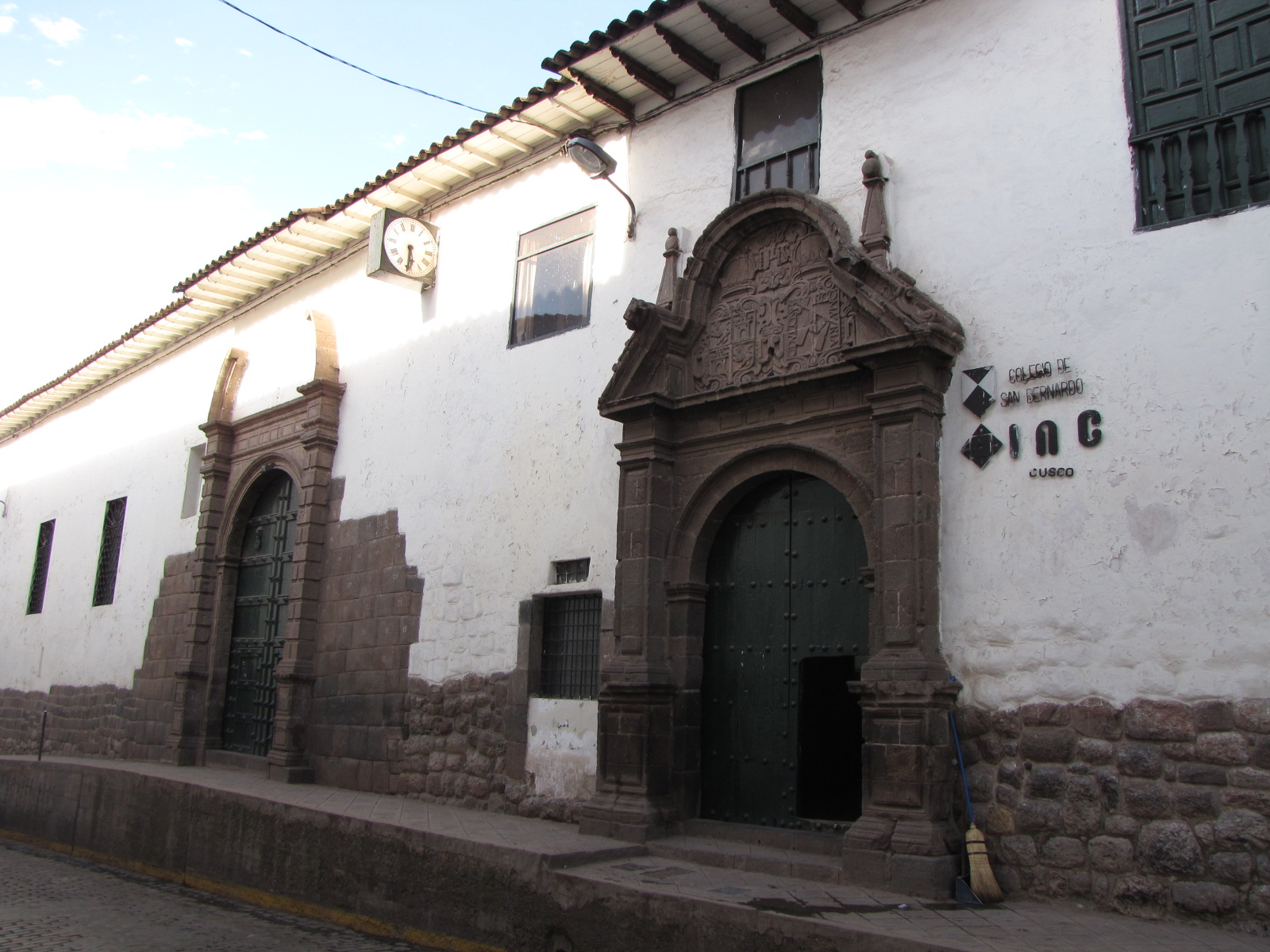
Admission tickets to Machu Picchu are apparently only good for three days (starting the day you purchase them) and according to PeruRail, tickets were limited and only available in Cusco.  We were informed by the hostel staff that the ticket office was only open from 7am to 1pm on Saturdays so off I went to buy the tickets.  So there I was at the Instituto Nacional de Cultura (INC) office just before 7am and noticed that the door was open so I asked the official working there if this is where I buy the Machu Picchu tickets.  He said yes but also asked me to leave the building as it wasn't open yet.  The ticket office opens at 8am, he said.  So with an hour to spare, I walked around the tourist district and checked out the market again, where I noticed that there were a lot more meat stalls today.  Perhaps, Peruvians eat more meat on Saturdays.


Anyways, I ran out of things to see and do (and photograph) as the city was just waking up so I headed back to the office and waited there until 8:00am.  There was no activity, which seemed odd, so I decided to wait a few minutes since nothing seemed to start on time in Peru but I quickly grew impatient, and walked into the office and found an employee.  She informed me that the office did not sell tickets, and the actual ticket office was down the street in another INC office.  She was unable to recall the street number of the building so I was on my own in figuring that out.  This leads to another point regarding South America.  Each block seems to have a different street name even though it's the same street.  Once you hit an intersection, the street usually changes names.  If you're lucky enough, there's a tiny little street sign, 10-12 feet above street level, on the side of the corner building.  I was evidently on the right street (yet different name) at an office of the same department as the one where tickets to Machu Picchu are sold.  Nevertheless, I managed to find the right office, one block down the street, but to my surprise, there were no signs indicating that this was indeed the location of the Machu Picchu ticket office, nor any directions once inside to indicate which room it could be found.


Since I could never find the actual ticket prices to Machu Picchu in any of my online research, I thought I'd share it with those you who somehow managed to find this post.  So here they are, straight from the ticket office, for those of you interested in such things:


Note that PeruRail's information regarding the closure of the Aguas Calientes' ticket office was incorrect. It was in fact open and offered the same ticket prices as the Cusco office. PeruRail's statement that only a limited number of Machu Picchu entrance tickets are available was also incorrect. Luckily, I went to the bank machine beforehand as the ticket office only accepted Peruvian cash.  It should also be noted that the above prices are solely for admission to the site and do not include the train tickets, bus tickets (from Aguas Calientes to the site), and Inca Trail permits (if so one chooses to hike the trail) involved in a visit to Machu Picchu.


With tickets in hand, it was back to the hostel for breakfast before enjoying our last full day in Cusco.

---

2011 UPDATE:

Something to keep in mind before you book your trip to Machu Picchu...


According to a July 27, 2011 Associated Press article:

"Hundreds of unticketed tourists have been turned away from Machu Picchu this week as Peru's famed Inca ruins reached capacity. Angry tourists blocked a bridge for two hours Monday in the town of Aguas Calientes at the entrance to the ruins. That impeded buses that ferry visitors to the hilltop archaeological site. Juan Julio Garcia is the regional tourism director in nearby Cuzco. He says some travel agencies have failed to inform visitors that they should get tickets in advance because of the daily load limit of 2,500 people. Authorities established the limit for Peru's main tourist attraction in 2005 as a conservation measure. In January, tickets became obtainable online. The site, http://www.machupicchu.gob.pe, can be slow to access."


If you found this information helpful, please click on one of the interesting Google advertising links on this blog to help me out. Thanks.

Cusco at Night

Although my travels to date have been fairly limited, I have quickly come to the realization that great cities have a split personality, providing one look during the day and another at night.  Cusco is one of those cities as its main square, Plaza de Armas, is lit up at night to provide it with a different look.
Another nice thing about hanging out in the Plaza at night is the limited number of hassling solicitations you receive. I guess the souvenir vendors head home to spend some quality time with their families after hitting their daily quotas.  Of course, you still come across those interested in getting you into their restaurants and bars but it's a lot more bearable and pleasant to walk around the area.
You might also come across some things that you didn't notice during the day or a street vendor that is out and about in the evening to earn some extra income after a hard day's work. 


So while Cusco looks nice during the day, you are definitely missing out on some of its flare unless you head out on the town in the evening to enjoy its sites and local cuisine.

Shopping with the Locals

May 28 (Day 10)

Before our trip, we had developed a rough itinerary that set aside Days 10 and 11 as contingency days in case we couldn't fly out of the Amazon and had to drive back to Cusco as part of the 8-day tour. This was a real possibility in the event of rain and/or fog so we decided to play it safe and not book our train tickets for either one of these two days.  Well, our flight occurred as planned so we had two days to spare in Cusco before our trip to Macchu Pichu.  

Besides taking it easy and relaxing, we visited the Central Market (Mercado Centrale) where the locals and a few curious tourists (like us) go to shop. 
You can buy pretty much anything natural here. From fruits, vegetables, meat, reptiles, fish, spices and cheese to woven souvenir garments, table clothes, stuffed dead baby alpacas (yes, the locals were buying these for their kids) to flowers and prepared foods and fresh juices, this market has it all under a single roof. It was definitely a sight to see, as you had aisle after aisle of vendors in questionable sanitary conditions (especially in the meat section).
This was one of those times when we really wished we had access to a kitchen to cook because the food looked delicious and in many cases, unique to South America, and we were eager to try cooking up a storm with these delicacies. I was particularly interested in trying all the different varieties of potatoes and corn, as the potatoes I had at restaurants were so flavourful that I can only imagine how all the other varieties tasted like.
Speaking of different varieties, there were countless different types of corn that were so colourful and the kernels were so huge... Mmmm, mmmm, corn on the cob would have been delicious!
You definitely can't find this type of variety of vegetables in stores, or even markets, in Canada. Who knows if such varieties even exist in Canada.  I was very tempted to find and buy seeds of all these interesting fruits and vegetables but bringing back agricultural products is a major inconvenience (with little chances of even happening, especially with my luck at border crossings) so I decided not to bother. But it definitely rekindled my interest in researching heritage and heirloom seeds to grow in my own backyard.

Not having access to a kitchen hindered our purchasing choices that day but it didn't mean we left empty-handed.  We bought mangoes, bananas, apples, pears, grapes, avocados, brazilian nuts, and local cheese, and headed back "home" to sample some of them on our balcony.
Now this is how tropical fruit is supposed to taste like!  While the grapes and apples left something to be desired, the pineapple, avocados, bananas, and mangoes were simply delicious. The brazilian nuts were great too.

Amazon Hostal Review


The Manu tour operator, Amazon Trails Peru (ATP), operates a hostel in the San Blas district of Cusco (a.k.a. Cuzco), and since we had already booked our Amazon tour with ATP, we thought it would be best if we just booked a stay at their hostel for our two pre-Amazon days in Cusco and if the accommodations weren't to our liking, we'd just go elsewhere for our stay in town after the Amazon.

Well, I'm glad to say that we didn't have to look anywhere else as the Amazon Hostal was a fantasic place to stay in Cusco.  Located along a quiet pedestrian street a few blocks  from the main square (Plaza de Armas) and tourist district, Amazon Hostal provided us with a peaceful getaway from the hustle and bustle while providing a great view of the city.

Here are some photos to give you a better idea of what to expect if you stay at Amazon Hostal:

Calle Tandapata - The street in front of the hostel:

The entrances to the ATP sales office and Amazon Hostal:

The main lobby:
BTW: My next home will have a spiral staircase!

The interior courtyard:

The balcony with the panoramic view of the city:
Cheese and fruits are not included.

Here's the triple bedroom we occupied our first two nights:
with a private bathroom (with a hot water shower):

And here's the triple bedroom we stayed in after the Amazon excursion:

plus here's a sneak peak of a neighbouring room:
 

As you can see from the photos, the comfortable rooms were clean and spacious, with a housekeeper coming by every day to clean up the place, make the beds, and even fold my pajamas!  A simple breakfast was served in the Breakfast Room (in the lower level of the courtyard) every morning and Internet access was available from the computer in the corner of the main lobby. We were also able to leave our belongings in the "Secure Room" during our Amazon trip.

And now for a few minor things that Amazon Hostal could improve:
  1. The toilets would continuously run water unless you opened the tank lid and played around the trip lever after each flush.  This noisy annoyance occurred in both rooms (but to be fair, it also occurred in many other hostels on our trip so maybe it's an issue common to South American toilets).
  2. The flimsy locks on the interior balcony doors could be a lot more secure, especially since the balconies are shared amongst tenants on the same floor.
  3. The computer and Internet access could have been a lot faster.  The PC's performance was so frustratingly slow, it was basically useless.  We ended up relying on the Internet Cafe around the block for our computer needs.
  4. A scale to weigh luggage would have been very useful (especially for those taking part in ATP's tours requiring air travel).
  5. A table on the balcony would have made the balcony absolutely perfect.
  6. A kitchen to cook our own food would have been nice.
  7. I'm sure the girls would have appreciated a hair dryer. But then again, a hot tub on the balcony would be on everyone's wish list as well!

All in all, Amazon Hostal in Cusco (Peru) was pretty much everything we desired in a hostel. I would definitely recommend it to anyone staying in Cusco,  In fact, we have already done so on several occasions!


If you found this unbiased review helpful, please click on one of the interesting Google advertising links on this blog to help me out. Thanks.

The Secret Drug Cartel Airstrip


May 27 (Day 9)

Our last day in Amazon starts like every other day with an early morning wake-up call.  Edouard was determined to show us the Giant River Otters and we were off to the oxbow lake for a third attempt (minus the German couple, who elected to grab some extra zzz's instead).  As we approached the lake's dock, we heard some splashing and sure enough, there they were, giggling at us, like otters like to do.  
We jumped into the catamaran to "follow" the otters as they swam away.  This was a comical yet much appreciated gesture as Edouard could have just said, "Well  my friends, there you have your Giant River Otters. Now let's head back and grab the Germans to catch our flight" but we ventured out onto the lake.  I say comical because otters are pretty much the equivalent of furry dolphins. They're playful and fast in the water and the idea that we could "follow" and "catch up to them" with our catamaran was totally unrealistic.  That said, we did come across otters enjoying their fresh catch while others were jumping out of the water and swimming across the lake. Thanks Edouard!
After our two-hour catamaran ride ended, we headed back to the lodge to pick up the Germans and ate breakfast before heading on our 5-hour canoe ride to the airport.  As we made our way back down the Manu River, we continued to see more wildlife including this massive caiman only a few metres from our canoe... luckily, it seemed to be more afraid of us than us of him as he turned away from us and proceeded to the shoreline instead of towards us.
We continued on our way until out of nowhere, Edouard shouts out, "Jaguar, Jaguar!". Yeah right, Edouard. Funny, funny.  You said all along our journey through the Amazon that jaguars are elusive creatures and are rarely seen yet sure enough, we came across a wild juvenile jaguar in the Amazon!  Jaguar: Check!  Our Amazon wildlife list is complete!
After a brief stop in Boca Manu village to drop off our shy, Peruvian government official (who was suspiciously thoughtful enough to avoid being photographed), we made our way to the nearby grass runway "formerly used" by the drug cartel to ship their goods.  The Boca Manu Airstrip is pretty much that. A grass airstrip in the middle of the jungle.  Getting out of the boat and climbing the steep mud slope, we didn't know what to expect when we started our walk in the jungle yet soon enough, the airport appeared in the opening with first, its restaurant and washroom
and then the actual airport terminal...
The flights from and to Boca Manu are operated with small airplanes (Twin Otter and Grand Caravan) and the schedule reportedly varies according to flight demand and thus is not very exact.  After checking in and paying a $15 USD per person (one-way) tax for Boca Manu's airstrip, each of us had our luggage weighed.  The luggage limit on the plane is 10 kg per person with a fee of $3 USD per extra kilo. And then get this, they weighed us!
Which is understandable, considering we were about to aboard this little 18-seat airplane.
We boarded the plane and soon enough, we were airborne...

to make our way back to Cusco in about 45 minutes.

The Long Winding Road to the Amazon

May 22, 2010 (Day 4)

We're off to an early start this morning (4:30 am) as we pack into a van in a dark alley in Cusco (elevation: ~3,300m) and make our way to the Amazon Rainforest as part of Amazon Trails Peru's tour of Manu National Park.


According to the brochure,
Manu is situated in the Peruvian part of the Amazon basin and is one of the world's great wilderness areas where wildlife is still undisturbed and plentiful. The Manu Biosphere Reserve protects Tropical Alpine Grasslands (Puna), Elfin (temperate) and Cloud Forests, High Rainforest and Lowland Rainforest. In these different ecosystems we can find an extraordinary variety of animal and plant species: So far 15,000 plant species, over 1,000 bird species and 200 species of mammals have been identified in Manu. According to biologists, no other rainforest park can compare with Manu's biodiversity (40 % more bird species than in the Brazilian Amazon) and opportunities to observe wildlife. Manu is remote, away from civilization and scarcely populated, which distinguishes Manu from other rainforest destinations like Puerto Maldonado. Some of the indigenous tribes in Manu have no contact to civilization.
 
After a quick stop at a stand alongside the highway to pick-up our bread supply for the next six days, we soon make our way onto what appears to be a mining road that hugs the edge of a mountain range. The dirt road that started out with carefully placed stone dividers to differentiate the two lanes quickly turned into a single lane gravel road with barely enough room for one vehicle, let alone opposing traffic. This, of course, presented many interesting situations as you have mountain rock on one side and sheer cliff on the other side of the road, and transport trucks bullying their way down the road.  Size definitely matters here. The bigger your vehicle, the more negotiating power you have when you come bumper-to-bumper with an opposing driver. The smaller vehicle usually had to reverse up to a few hundred meters to a wider stretch of the road (despite what common sense would otherwise dictate) to the point where we were only a few whiskers of the cliff's edge on several occasions.  The winding road also presented the problem of blind bends so our driver honked the horn to warn oncoming traffic of our presence and this avoided problems for the most part. The vistas were spectacular and the risk of an imminent fall down the cliff provided a great adrenaline rush that I definitely wouldn't mind doing again!


Along the way, we stopped in Ninamarka. Luckily, I didn't jump into the "huts" for a photo as I had initially thought of doing as we later were informed that the site was a pre-Inca cemetery and those little "huts" we're actually tombs. Talk about listening to your gut instincts!
We then continued on our way to Paucartambo village, where we stopped for breakfast and a little sightseeing of the bridge and local market where they sold the most delicious bananas of the entire trip!
After reaching an elevation of over 4,000m, we were ready to descend the eastern slopes of the Andes
and enter the cloud forest where we passed through several tunnels, including one with an almost 90-degree angle turn which resulted in the van scrapping the side of the tunnel.  While the crew was preparing our roadside picnic lunch, we ventured out for a walk and spotted Peru's national bird, the Cock of the Rock (Rupicola peruviana), within the lush vegetation of the cloud forest
and then sure enough, our first monkeys, only an arm's length away...

Landslides from the rainy season were evident throughout our afternoon drive and on several occasions, we had to get out of the van and walk a particular section of the road because the driver deemed it unsafe for us to stay in the van.
Considering all the close cliff-side calls earlier in the day in which we didn't evacuate the vehicle: When the driver says "Get out of the van", you get the fu@k out the van!  No questions asked!
Late in the afternoon, we visited a small family-run coca leaf farm and over 12 hours after the start of our day, we arrived in Atalaya (elevation: ~500m).  From here, a relatively quick 15 minutes boat ride took us to our home for the night, the Rio de Oro Lodge. 
After a late candle-lit dinner, there was an optional night walk that we, of course, took part in.  There's nothing like walking through the noisy rainforest in the darkness, relying on a few flashlights and keychain LED's to find your way around while spotting critters like poisonous tree frogs and wolf spiders by their eye reflections.
It was a long day yet it flew by like it was only a few minutes! Back to the lodge to get some sleep before our early departure in the morning.

Popular Posts

Gadgets By Spice Up Your Blog